
This guide is part of our long-form retail savings research series, which examines how online discounts and pricing systems work.
Sometimes shoppers encounter deals that seem almost too good to be true, products priced significantly below their usual market value, or even below what retailers originally paid for them.
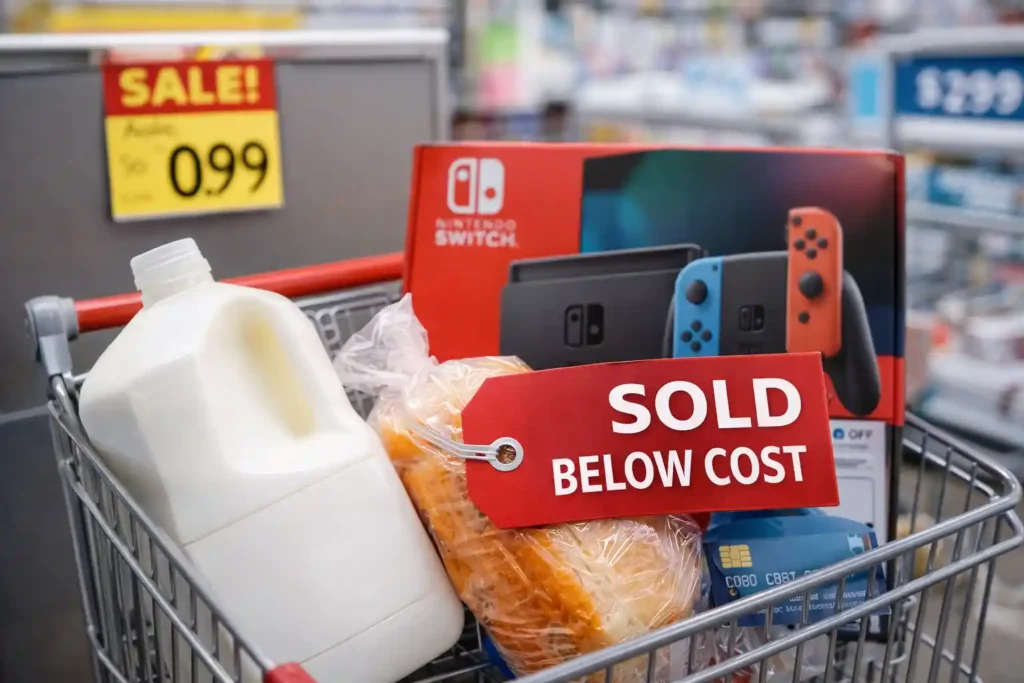
These offers are often referred to as loss leaders, a retail pricing strategy in which certain products are sold at a loss to attract customers and encourage additional purchases.
Understanding how loss leaders work helps explain why some promotions appear unusually generous and how retailers use these offers as part of broader sales strategies.
What Is a Loss Leader?
A loss leader is a product that a retailer sells below its cost price in order to attract customers.
The goal is not to profit from that specific product, but to:
- Bring shoppers into the store or website
- Encourage additional purchases
- Increase overall order value
- Build brand awareness
Once customers arrive for the discounted item, they often purchase other products that carry normal profit margins.
This approach allows retailers to offset the loss from the discounted item.
Why Retailers Use Loss Leader Pricing
Loss leader strategies work because shopping behavior rarely involves buying just one item.
Retailers know that when customers visit a store or website for a major discount, they often add additional products to their cart.
For example, a retailer may discount a popular electronic device or household item to attract attention. Once shoppers arrive, they may also purchase accessories, warranties, or related products.
This strategy increases the overall transaction value and helps retailers recover the initial loss.
Retailers frequently combine these strategies with promotional campaigns. Our article on how retailers use flash sales to influence buying explains how limited-time discounts encourage customers to act quickly.
Common Examples of Loss Leader Products
Loss leaders often involve products that are:
- Highly recognizable
- Frequently searched by consumers
- Easy to compare across retailers
Typical examples include:
- Grocery staples such as milk or bread
- Popular electronics or gaming devices
- Seasonal promotional items
- Limited-time promotional bundles
Because these products attract attention, retailers can use them to increase store traffic or online visits.
How Loss Leaders Connect to Pricing Algorithms
Modern retailers often use data analysis and automated systems to determine when loss leader pricing is effective.
Retail pricing tools analyze factors such as:
- Customer purchasing patterns
- Inventory levels
- seasonal demand
- competitor pricing
Our article on algorithmic pricing explains how automated systems help retailers determine optimal pricing strategies.
These systems allow retailers to test whether a loss leader promotion generates enough additional sales to justify the initial loss.
Loss Leaders and Dynamic Pricing
Loss leader promotions can also work alongside dynamic pricing systems.
Retailers may temporarily lower the price of a specific item to attract traffic during slow periods or competitive sales events.
Our guide on dynamic pricing explained explores how retailers adjust prices based on demand, competition, and inventory conditions.
These pricing systems can identify the best timing for introducing loss leader promotions.
The Role of A/B Pricing Experiments
Retailers sometimes test loss leader strategies using pricing experiments.
For example, one group of shoppers may see a heavily discounted product while another group sees a slightly different promotion.
By measuring which approach generates higher sales or larger orders, retailers refine their promotional strategies.
Our article on how retailers test pricing with A/B experiments explains how these tests help retailers optimize promotional offers.
Why Loss Leaders Benefit Shoppers
Although loss leader pricing is primarily designed to benefit retailers, shoppers can also gain significant savings.
Customers who recognize these promotions may purchase high-value items at unusually low prices.
However, it is important to remain aware of the retailer’s goal: encouraging additional purchases.
Understanding this strategy helps shoppers decide whether additional items are truly necessary.
Transparency and Pricing Practices
Retail pricing strategies must follow consumer protection guidelines to ensure promotions are not misleading.
Consumer protection agencies guide fair advertising practices and price transparency in retail marketing.
You can review consumer protection resources on pricing practices at:
How to Recognize Loss Leader Promotions
Shoppers may notice certain signs that a product is being used as a loss leader:
- Prices significantly lower than those of competitors
- Limited-time promotional pricing
- Restrictions on purchase quantity
- Promotions tied to broader sales campaigns
Understanding these signals can help shoppers identify genuine opportunities for savings.
You can also review verified and regularly updated offers on our homepage before completing a purchase.
To Conclude
Loss leader pricing is a long-standing retail strategy used to attract customers and stimulate additional purchases. By offering certain products at extremely low prices, retailers encourage shoppers to explore more items and increase their overall spending.
For consumers, these promotions can present valuable opportunities to purchase popular products at unusually low prices as long as they remain mindful of the broader marketing strategy behind the offer.
Understanding how loss leader pricing works provides deeper insight into the economics of retail promotions and the strategies retailers use to influence purchasing behavior.


